


Last Updated: November 2, 2026
Quick Summary
To stay warm hunting, wear a three-part layering system: a moisture-wicking wool or synthetic base layer, a fleece or puffy midlayer, and a windproof, water-resistant outer shell. Walk in light so you don't sweat, then add insulation at the stand, and cover your head and neck.
- Never wear cotton next to your skin because it holds sweat and turns cold fast.
- Pack your insulation, walk in light, and dress at the stand to avoid soaking your base layer.
- A foam or insulated seat pad stops heat draining into cold metal or wood.
- Wear a thin moisture-wicking liner under a wool sock and bring a spare pair.
- Heater Body Suit Boot Covers use 150g 3M Thinsulate insulation and are windproof and waterproof.
Table of Contents
- Build a Layering System That Traps Heat Without Sweat
- Best Hunting Base Layers for Cold Weather
- How to Stay Warm in a Tree Stand for Long Sits
- How to Keep Feet Warm While Hunting
- Frequently Asked Questions
Build a Layering System That Traps Heat Without Sweat
Learning how to stay warm hunting starts with one rule: trap heat, move moisture. A layering system has three parts: the base layer wicks sweat off your skin, the midlayer holds warmth, and the outer layer blocks wind and wet.
- Base layer: a thin wool or synthetic shirt and bottoms. Snug and dry, never cotton.
- Midlayer: fleece or a light puffy jacket, your insulation, easy to remove.
- Outer layer: a windproof, water-resistant shell. Wind strips heat faster than cold air alone (Understanding Wind Chill).
- Head and neck: a beanie and neck gaiter, since you lose a lot of heat through an uncovered head and neck.
Wool beats cotton every time. Cotton holds sweat against your skin and turns cold fast. Synthetic and merino wool pull moisture away and stay warm even when damp.
Watch out: heavy layers on the hike in soak your base layer with sweat. Pack the insulation, walk in light, and dress at the stand.
Here is how each part of the layering system works.
| Layer | What to wear | Why it matters |
|---|---|---|
| Base layer | Thin wool or synthetic shirt and bottoms | Wicks sweat off your skin; never cotton |
| Midlayer | Fleece or light puffy jacket | Holds warmth and is easy to remove |
| Outer layer | Windproof, water-resistant shell | Blocks wind and wet |
| Head and neck | Beanie and neck gaiter | You lose a lot of heat through an uncovered head and neck |
Best Hunting Base Layers for Cold Weather
The best hunting base layer for cold weather is a moisture-wicking merino wool or synthetic set, worn snug against the skin. It should move sweat away and dry fast. Fit matters more than brand or price.
- Fabric weight: midweight for cold sits, lightweight for active walks.
- Fit: snug but not tight, so it sits flat under your midlayer.
- Seams: flat seams that will not rub under a pack or harness.
- Zip neck: a quarter-zip lets you dump heat fast without stripping down.
How to Stay Warm in a Tree Stand for Long Sits
The key to staying warm in a tree stand is stopping heat loss before it starts. Sitting still for hours is the hardest test your clothing will face.
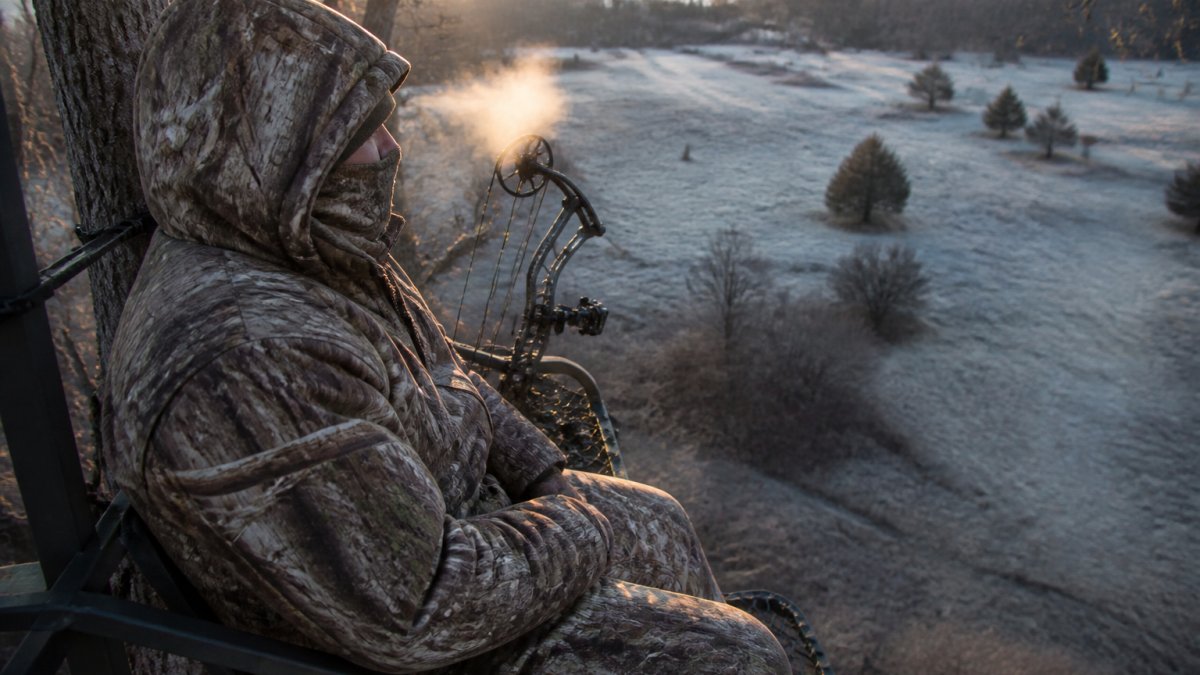
- Dress light for the walk in. Carry your insulation in a pack.
- Add layers at the stand. Base layer, then midlayer, then shell.
- Block the wind. A windproof outer layer matters more than extra bulk.
- Insulate your seat. A foam or insulated seat pad stops heat draining into cold metal or wood.
- Cover your head and neck. A hood and gaiter hold in warmth.
- Pack a full-body suit for the worst days. A suit like our Heater Body Suit AP is designed to keep you warm during long periods of sitting in cold conditions.
For a deeper walkthrough on long sits, our guide on how to stay warm in a tree stand all day covers the setup step by step.

How to Keep Feet Warm While Hunting
Cold feet come from two things: sweat and contact with cold ground. Fix both with dry socks, roomy boots, and insulation between your boots and the cold.
Start with socks: a thin moisture-wicking liner under a wool sock, no cotton. Bring a spare pair and change at the stand if your feet sweat on the walk in.
Then check your boots.
For the coldest sits, consider adding a layer over your boots. Our Heater Body Suit Boot Covers are windproof and waterproof, with 150g 3M Thinsulate insulation and extended coverage height that helps seal in warmth above the ankle.

- Keep your boots off the ground. Rest your feet on your pack or a platform.
- Add a hand muff and hand warmers. Cold hands and cold feet often travel together.
- Stay hydrated and eat. Your body needs fuel to make heat.
Frequently Asked Questions
What is the best way to stay warm while hunting?
Start with a moisture-wicking base layer, add an insulating midlayer, and finish with a windproof, water-resistant outer layer. Keep your head, hands, and feet covered, and use a full-body insulated suit like the Heater Body Suit AP ($299.99) for long sits.
How do you keep your feet warm while hunting?
Wear moisture-wicking socks, never cotton, and change into a dry pair once you reach your stand. Insulated boots with room to wiggle your toes help circulation. Add boot covers like the Heater Body Suit Boot Covers ($63.99), which use 150g 3M Thinsulate insulation and a windproof, waterproof shell to seal warmth above the ankle.
What should you wear for hunting in 10 degree weather?
At 10 degrees, wear a wool or synthetic base layer, a fleece or down midlayer, and a windproof outer shell. For long stationary sits, a full-body suit such as the Heater Body Suit Xtreme ($369.00) with 360 grams of insulation traps body heat and blocks wind.
Cold weather does not have to cut your season short. The hunters who stay out longest are the ones who dress in layers, manage sweat, and protect their hands and feet. At Killz Products, we build gear for exactly that: our Heater Body Suit is waterproof, windproof, and insulated to keep you on stand longer, with a sealed hood and backpack straps for the walk in. Get started with Killz Products and stay warm, stay still, and stay out there.


